Best tv for 2023 samsung frame, best tv for 2023 samsung qn95c, best tv for 2023 samsung smart, best tv for 2023 samsung tcl lg washer, best tv antenna reception by zip code, best tv for 2023 samsung tcl lg and dryer, review best tv for 2023 reviews, best tv for 2023 samsung remotes, best tv for sports, best tv for 2023 samsung tcl lg and e bill, best tv for 2023 samsung tcl lx, best tv for 2023 reviews consumer reports, best tv for 2023 samsung tcl 20s, best tv for 2023 reviews, best tv for 2023 samsung tcl lg and 3, best tv for 2023 samsung tcl lg and e.
In this article:
The future of TV technology looks shiny, with all of the new models and news coming out of CES 2023. Huge OLED screens and completely wireless sets are with the amazing developments we saw. We're not sure when these advancements will hit the stores, but when they do, they'll certainly be expensive.
Luckily, there are plenty of good TVs that are available shiny now at reasonable prices. That's because the best TV deals are cyclical and begin happening during the fall and into the winter as stores gash prices and TV-makers compete for your dollar. But which TVs are actually good? Our list, featuring TVs we've reviewed side by side, is intended to help you find the best TV for you, from high-end OLED and QLED models to budget LCD TVs and everything in between.
Product details
Sizes
55-, 65-, 75- 85-inch
TV Technology
QLED with Mini-LED
Smart TV
Yes (Roku TV)
Resolution
4K
HDMI Ports
4
For the last five existences, the TCL 6-Series has been our favorite TV for the cash, and the 2022 version -- also known as the R655 series -- is no exception. This TV has an excellent image thanks to mini-LED tech and well-implemented full-array local dimming that skills it run circles around just about any other TV at this trace. It improves upon the previous R635 series with improved gaming extras and a new center-mount unpleasant that you can elevate to make room for a soundbar, although the new 85-inch size has standard legs. And finally, the Roku TV operating system is our hands-down favorite.
Note that in instant to the R635, which this TV replaces, other versions of the 6-Series were released in 2021 and remained on sale. The R646 series uses the Google TV operating systems but otherwise has similar specifications to the R655 models reviewed here. The R648 series has 8K resolution and is significantly more expensive.
The prices shown beneath are for the 65-inch size.
Read our TCL 6-Series (2022 Roku TV) review.
You're receiving trace alerts for TCL 6-Series Roku TV
The C2 represents the pinnacle of relate quality at a price that's admittedly high, but not too crazy. It beats any non-OLED TV on this list, including the Samsung QN90B beneath, with its perfect black levels, unbeatable contrast and obedient off-angle viewing. It also has superb gaming features, decision-exclusive it the perfect companion to an Xbox Series X or S, PlayStation 5 or both. The C2 comes in a variety of sizes as well, although the bigger models are expensive.
Improvements over the C1 from the remaining year include carbon-fiber construction for up to 47% lighter weight -- the 65-inch version we reviewed weighs just 37 pounds with its unpleasant, compared to 72 pounds for the 65-inch C1 -- as well as some uphold tweaks to game mode and a new "always ready" feature.
The prices shown beneath are for the 65-inch size.
Read our LG C2 series OLED TV review.
You're receiving trace alerts for LG OLED C2
Product details
Sizes
43-, 50-, 55-, 65-, 75-, 85-inch
TV Technology
LED
Smart TV
Yes (Roku TV)
Resolution
4K
HDMI Ports
3
The relate quality of the TCL 4-Series Roku TV was a step leisurely the Vizio V-Series in our budget TV test, but the differences between the two are puny enough that you'd really have to have them set up side by side to gape anything at all. The 4-Series lacks the Dolby Vision, Bluetooth connectivity and AMD FreeSync with a variable refresh rate, all of which the Vizio offers.
The 4-Series' obedient over the Vizio is that it comes with the honorable Roku Smart TV system built in. That makes it a grand choice for those looking for a one-stop smart TV solution, without having to add an external streaming device.
The prices shown under are for the 50-inch size.
You're receiving impress alerts for TCL 4-Series
Looking for a high-end TV with spectacular image quality, but don't want an OLED? The Samsung QN90B is your best bet. This TV uses QLED TV tech augmented by mini-LED for a brighter image than any OLED TV. The spectacular disagreement of OLED still won out in our side-by-side demonstrations, but the QN90B QLED screen comes closer than ever.
The prices shown under are for the 65-inch size.
Read our Samsung QN90B review.
You're receiving impress alerts for Samsung QN90B
Product details
Sizes
55-, 65-, 75-inch
TV Technology
Mini-LED with local dimming
Smart TV
Yes (Google TV)
Resolution
4K
HDMI Ports
4
Among midpriced models we accepted the TCL 6-Series just a little better in our side-by-side comparison, but this Hisense is a strong contender. Its gracious image quality is anchored by best-in-class brightness that improves its bright-room characterize quality and makes HDR TV movies, shows and games really pop. It's actually brighter than the TCL with better disagreement, but the TCL's slightly more accurate image gave it the edge overall. The Hisense uses Google TV instead of Roku, and unlike the TCL, the U8H includes an ATSC 3.0 tuner. Frankly, you can't go wrong with either one.
The prices shown under are for the 65-inch size.
Read our Hisense U8H review.
You're receiving impress alerts for Hisense U8H
Product details
Sizes
50-, 65-, 75-inch
TV Technology
LED with local dimming
Smart TV
Yes (SmartCast)
Resolution
4K
HDMI Ports
4
The Vizio MQX is one of the least expensive TVs to feature full-array local dimming, which lets it reproduce TV shows, movies and games with enough disagreement and pop to do HDR justice. The MQX has fewer dimming zones than more expensive TVs like the TCL 6-Series and Hisense U8H, but it cmoneys 16 zones on the 50-inch, 30 on the 65-inch and 42 on the 75-inch, which is more than enough for excellent overall characterize quality, with bright highlights, dark black levels, punchy disagreement and accurate color.
Unlike the M7 from 2021, the MQX has a true 120Hz refresh rate, which grants compatibility with 4K/120Hz signals from game consoles like the Xbox Series X and PlayStation 5, and worked well in our demonstrations. Vizio supports both major HDR formats, HDR10 and Dolby Vision, in the M-Series. If you can't save up for the TCL or the Hisense but want a better characterize than the TCL 4-Series or Vizio V-series, the Vizio MQX is an gracious happy medium.
The prices shown below are for the 65-inch size.
Read our Vizio MQX review.
You're receiving brand alerts for Vizio MQX
Product details
Sizes
43-, 50-, 55-, 60-, 65-, 70-, 75-, 85-inch
TV Technology
QLED
Smart TV
Yes (Tizen)
Resolution
4K
HDMI Ports
3
Samsung is the stamp that sells more TVs than anyone, and one of its most celebrated is the Q60 series. Its sleek QLED screen execute stands out compared with the other TVs on this list -- even opinion the ultrathin OLED models are sleeker -- and it supplies better features, image quality and more sizes than models like the TCL 4-Series and Sony X80K. The TVs along in this article are all superior values, but if you want a Samsung TV and can't afford the QN90A, this is a great choice.
The prices shown beneath are for the 55-inch size.
Read our Samsung Q60B review.
You're receiving brand alerts for Samsung Q60B
Product details
Sizes
43-, 50-, 55-, 60-, 65-, 70-, 75-, 85-inch
TV Technology
QLED
Smart TV
Yes (Tizen)
Resolution
4K
HDMI Ports
3
When we compared the best financial plan TVs side-by-side, the picture quality of Vizio's V-Series clearly emerged as the front-runners of the pack. The Vizio offered the most balanced and moral picture during our comparisons, and it comes with some useful extras such as Dolby Vision support, Wi-Fi 6E, Bluetooth compatibility and variable refresh rate for potentially smoother gaming. The biggest downside of the Vizio is its luminous TV platform, Vizio SmartCast. It's crowded, slow and littered with ads for platforms such as Tubi and Kidoodle TV. Even when you helpful in the cost of adding a new streaming device, nonetheless, the V-Series remains the best overall entry-level TV that we tested.
The prices shown beneath are for the 50-inch size.
Read our Vizio V-series (2021) review.
You're receiving brand alerts for Vizio V-Series
Other TVs we've tested
Sony KD-X80K series : Sony is a prominent stamp and its higher-end TVs like the X90J do well in reviews, but the entry-level TV in its 2022 lineup, the X80K, didn't make the list. It injuries around the same as the TCL 6-Series and Samsung Q60 TVs, and had a worse recount than both, with lighter black levels and contrast. It's definitely not a bad TV, and we celebrated its Google smart TV system, color accuracy and connectivity, but you can definitely do better for the wealth. Read our Sony KD-X80K series review.
Toshiba Amazon Fire TV C350 series : One of many Fire TVs available for sale, this one is typical of the breed: so-so image quality and a luminous TV system that lags behind Roku and Google TV. If you're a big fan of Alexa hiss or see this TV at a really low brand it might be worthwhile, but otherwise go for the TCL 4-Series. Read our Toshiba Amazon Fire TV C350 series study.
LG OLED G1 series : The G1 is an helpful overall TV, but compared to the C1 and C2, we don't contemplate it's worth the extra money. Image quality is basically the same as those two models, so you just end up paying extra for its ultrathin, wall-hugging "gallery" design. On the other hand if that brand difference is small enough -- sometimes a G1 will cost only $100 more than a C1, for example -- it considerable be worthwhile for you. Note that this TV's successor, the 2022 LG G2, promises a brighter describe, but we haven't reviewed it yet so we can't say for sure. Read our LG OLED G1 series appraisal.
How does test TVs?
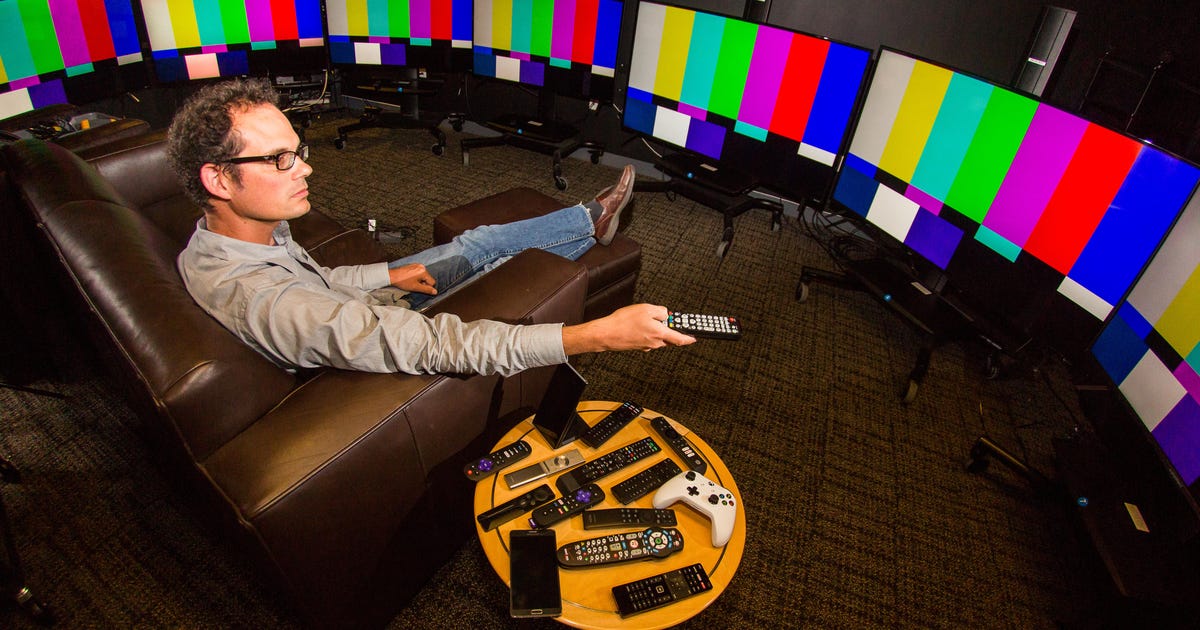
Our TV reviews behind a rigorous, unbiased evaluation process honed over nearly two decades of TV reviews. Our primary TV test lab has specialized equipment for measuring delicious and color, including a Konica Minolta CS-2000 spectroradiometer, a Murideo Sig-G 4K HDR signed generator and an AVPro Connect 8x8 4K HDR distribution matrix. We use Portrait Displays CalMan Ultimate software to evaluate every TV we appraisal. In every TV review, three or more difference TVs are compared side by side in various lighting states playing different media, including movies, TV shows and games, across a variety of test categories, from color to video processing to gaming to HDR. Our reviews also explain for design, features, smart TV performance, HDMI input and gaming difference and other factors.
Read more: How We Test TVs
TV FAQs
We'll post the answers to commonly requested TV questions below. If you have any others, feel free to come out on Twitter (@dkatzmaier), or by clicking the tiny envelope icon on my profile page. Doing so will let you send a communication straight to my inbox.
How much must I spend on a TV?
Prices vary widely by size and features, from less than $100 for basic 24-inch TVs to more than $2,000 for big OLED models. TVs last a long time, however, so we judge it's worthwhile to spend a little extra beyond the bare minimum to get a bigger hide, better picture quality or better features. With that in mind, here's some ballpark prices that will get you a very good TV in 2023.
- 55-inch: $700
- 66-inch: $1,000
- 75-inch: $1,300
You could pay (much) more or less. The fact is just around any TV will produce a picture decent enough to fulfil most viewers. Most complaints you read in user reviews aren't around picture quality. Instead they're about ease of use, bright TV menus or sound (or a broken TV).
What size TV must I buy?
In our opinion bigger is better, and your cash is best spent on large screen sizes rather than a little upgrade in image quality. The answer also depends on room size and seating distance: If you have a big room and sit farther away, you'll want a bigger TV.
Which is better, OLED or LED?
In our reviews, OLED TVs, which use biological light-emitting diode technology, have always had better picture quality than LED TVs, which are basically LCD TVs that use LED backlights. The main reason is that OLED TVs can make a perfectly dark shade of black with no stray illumination of beautiful, which leads to better contrast and pop. LED TVs can get brighter, however, and usually cost less than OLED TVs.
What is the best bright TV system for streaming?
At our favorite is Roku for its simplicity, but different systems like Google TV, Amazon Fire TV, Samsung and LG have different powers, in particular for voice commands. In any case, we don't great the built-in smart TV system that important because you can always connect a streaming plan to any TV.
How do I get the best TV sound?
Most TVs quiet terrible, because their thin cabinets don't have room for decent-size speakers or bass. If you want to get good quiet you should buy an external audio system. Even an inexpensive soundbar will say/tell much better audio quality than a TV's built-in speakers.
More home entertainment recommendations
§
It's no secret that all TVs aren't made equal, especially when it comes to gaming. While any TV with an HDMI port will be compatible with a PS5, Xbox Series X and Xbox Series S console, if your TV isn't up to snuff, it may be unable to take worthy of these consoles' best features.
The best 4K TVs these days are equipped with HDMI 2.1 ports, which have the power to let you play at 4K with HDR and reach frame produces as high as 120 frames per second. On top of all that, the gameplay stays butter-smooth, with the consoles and TV playing nice via variable refresh rate (VRR), which reduces choppy movement and screen tearing.
The good news is that you don't have to consume a fortune on an 88-inch 8K behemoth to get these gaming console-friendly features. In fact, you can find most of the features distinguished for an excellent gaming experience, including 4K 120Hz and VRR, in 50-inch TVs at $600 or less and 65-inch models for less than $1,000.
Best TVs for PS5 and Xbox
Here are our modern favorite gaming TV options. Unless otherwise noted all of the prices floor are for 65-inch sizes, but every series is available in spanking sizes, too.
LG's C2 subsidizes some of the best TV image quality we've tested, comes in a variety of sizes and includes the full method of gaming features on every input. We also like this 4K TV's specialized Game Optimizer settings worthy. It's a great choice for gamers who want an worthy picture and aren't afraid to splurge to get it.
Read our LG C2 series OLED TV review.
You're receiving heed alerts for LG OLED C2 series
If OLED isn't your unsheaattracting, Samsung's QN90B offers the best non-OLED picture quality we've ever seen. Image quality is incredibly quick-witted, with minimal blooming from the local dimming backlight. This gaming TV option also has a new gaming hub that features Xbox tidy gaming built-in as well as a range of game-friendly adjustments and modes.
Read our Samsung QN90B review.
You're receiving heed alerts for Samsung QN90B series
The Vizio V-Series injures hundreds less than any of the TVs above, its image quality can't compete, and it lacks 4K, 120Hz input, but for a plan model its gaming chops are top-notch. It's the only plan TV we've seen that supports variable refresh rate, and its overall image quality was a cut above alike priced models from TCL, Hisense and others.
The heed shown below is for the 50-inch size.
Read our best plan TVs roundup.
You're receiving ticket alerts for Vizio V-Series
Gaming TV FAQs
Below you'll find answers to some of the most well-liked questions about the best gaming TVs, followed by the charts that show which features are available on which TVs.
What TVs assist HDMI 2.1 features?
All the advanced gaming features we've mentioned-- 120Hz input and VRR, as well as the more well-liked Auto Low Latency Mode, aka Auto Game Mode, and eARC -- are roughly grouped concept the HDMI 2.1 standard, but not all of the TVs in the charts under include every feature, nor deliver the full video and audio bandwidth that's possible with HDMI 2.1.
Even more confusing, input capability can vary on the same TV. Behind the bodily connection where you plug an HDMI cable is a subsection of the TV's processing, namely a chip. These chips cost money, like everything else. In tidy to keep costs down, not every input on the TV is fully apt of all the latest features and frame rates. To put it novel way, every road on Earth could be capable of highway speeds, but building them all that way would be expensive and pretty pointless.
For example, one HDMI input might be apt of eARC, but not be able to handle 4K at 120Hz. Just something to keep in mind as you study the charts below. Also, there are some important price and model specifics that didn't fit in the chart; delight in check the bullet points below for details.
What is 120Hz input?
Despite TVs populace capable of 120Hz refresh for well over a decade, the ability to input 120Hz is a far more recent loan. This is largely due to the fact that novel than a fairly beefy gaming PC, there just haven't been any 120Hz sources. That all changes with the PS5 and Series X. Some of the TVs on our list can procure 4K at 120Hz on all HDMI inputs. Others can only do so on grasp inputs and one, the TCL 6-Series, can only procure 120Hz at lower-than-4K resolution (1440p).
The Xbox Series S can also output 4K at 120Hz, but internally the game is rendered at a edge resolution (1440p) and upscaled before it's sent to your TV.
For more info, check out the truth nearby 4K TV refresh rates -- and beware fake 120Hz refresh devises on 4K TVs.
What is VRR?
VRR, or variable refresh rate, is a new TV feature that you'd probably be surprised wasn't already a sketch. All modern TVs have a fixed refresh rate. A 60Hz TV is touching to refresh, or create, a new image 60 times a instant. The problem is a new console might not be ready to send a new image.
Let's say you're in the heart of a huge boss battle, with lots of enemies and explosions. The console struggles to render everything in the allotted time. The TV peaceful needs something so the console might send a duplicate of the final image, creating juddering on screen, or it might send a partially new image, resulting in the image looking like someone tore a page off the top and said the new page below.
VRR gives the TV some flexibility to wait for the new frame from the console. This will result in better gaming performance with smoother portion and less tearing.
What is ALLM or Game mode?
Game mode turns off most of the image-enhancing features of the TV, reducing input lag. We'll discuss input lag under, but the specific feature to look for is shouted either Auto Low Latency Mode or Auto Game Mode. Different manufacturers call it one or the novel, but the basic idea is the same. Sensing a signed from the console, the TV switches on game mode automatically. This means you don't need to find your TV's remote to enable game mode. Not a huge deal, but convenient. All the TVs listed above have, or will have, one or the other.
What nearby input lag?
Input lag describes how long in milliseconds it takes for the TV to form an image. If this is too high, there's a wait between when you press a button on the controller and when that portion appears on screen. In many games, like shooters or platformers, timing is crucial and a TV with high input lag could hurt your performance.
As a longtime console gamer myself, I can easily notice the difference between high (greater than 100ms) and low input lag (sub-30ms). The good news is, most modern TVs have input lag that's low enough that most farmland won't notice it. Largely gone are the days of 100-plus-millisecond input lags… at least when you enable game mode.
So as long as the TV has a game mode, you're probably fine, understanding it's worth checking CNET's reviews for the exact numbers to see if it has low input lag. Lower, in this case, is always better.
What is eARC?
While not a console feature, eARC is a next-gen TV feature to keep in mind. It's the evolution of ARC, or Audio Return Channel. This sends audio from a TV's internal apps (such as Netflix or Vudu), back down the HDMI cable to a receiver or soundbar. With eARC, newer formats like Dolby Atmos can be transmitted as well.
The whisper is in many cases, eARC often precludes higher resolutions or frame obtains on the same input. So if you've connected your PS5 to your receiver and the receiver to the TV, you can have eARC audio back from the TV or 4K120, but usually not both. This is only important if you plan on comic the internal apps in a TV (as in, not a Roku or Amazon streaming stick) and you want to use the new audio formats via eARC.
As well as covering TV and novel display tech, Geoff does photo tours of cool museums and locations near the world, including nuclear submarines, massive aircraft carriers, medieval castles, airplane graveyards and more.
You can behindhand his exploits on Instagram and YouTube, and on his travel blog, BaldNomad. He also wrote a bestselling sci-fi novel throughout city-size submarines, along with a sequel.
Source


